GPT Image 2.5 comic and storyboard prompts
Verified against OpenAI documentation on 2026-09-09
Sequential art asks for something a single image never does: the same character has to survive from panel to panel. These GPT Image 2.5 comic and storyboard prompts state the panel count and the reading order first, repeat one fixed character description word for word, then give each panel its own shot. Keep the repetition even when it feels clumsy, because that is what holds the character together.
What makes these work
- 01
State the panel count and the reading order in the first sentence. Four panels in a two by two grid read left to right and top to bottom removes the guesswork that otherwise produces five uneven boxes.
- 02
Write one character description and repeat it verbatim in every panel. A woman in her thirties, shaved head, round wire glasses, olive green field jacket, copied exactly each time, holds a character far better than saying the same woman.
- 03
Describe the shot for each panel the way a director would. Wide establishing, over the shoulder, tight close on the hands, low angle. Varying the shot is what turns four drawings into a sequence.
- 04
Keep dialogue to a handful of words per balloon and put it in quotation marks. Short lines render more reliably, and a strip with three balloons of five words each will beat one with a full page of script.
- 05
Say where the balloons and captions sit, and leave the space for them. Asking for a clear upper left corner in a panel gives lettering somewhere to go without covering a face.
8 prompts
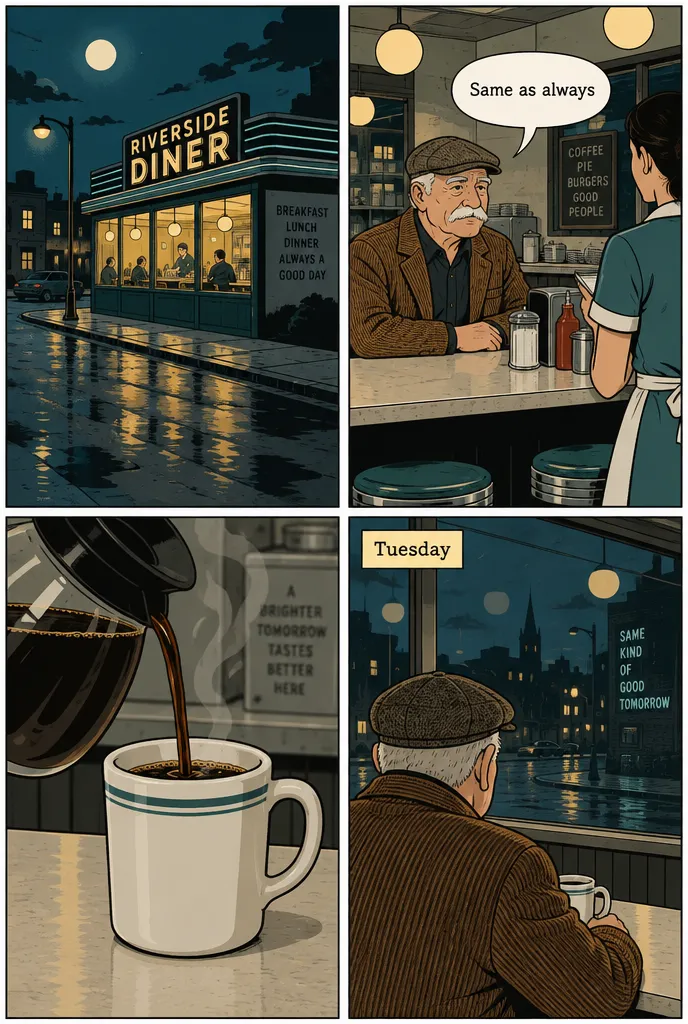
Four panel diner strip
sunburst · high · 1024x1536 · 29s
Four panel comic strip in a two by two grid, read left to right and top to bottom, with even white gutters and thin black panel borders. Ink and flat colour, limited palette of teal, mustard and warm grey. The recurring character in every panel is a man in his sixties, heavy white moustache, flat cap, brown corduroy jacket. Panel one is a wide shot of a corner diner at night. Panel two is a medium shot of him at the counter, speech balloon reading "Same as always". Panel three is a tight close on a coffee cup being filled. Panel four is an over the shoulder shot from behind him facing the window, caption box in the upper left reading "Tuesday". Leave balloon space clear of faces.
The character description repeats in full rather than as a pronoun, which is the single biggest factor in panel to panel consistency. Two short balloons is a realistic budget for a four panel strip.
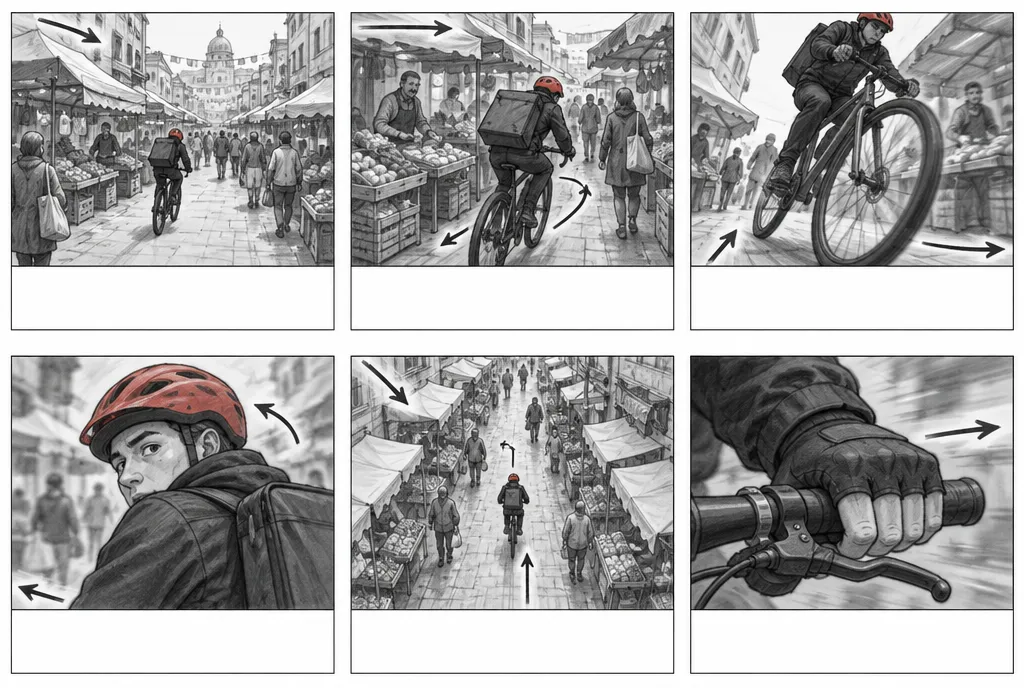
Six panel chase storyboard
flare · high · 1536x1024 · 28s
Six panel film storyboard in a three by two grid, read left to right then down, drawn in loose graphite with grey marker shading and no colour. Each panel is a 16 by 9 rectangle with a thin border and a blank strip beneath it for notes. The recurring figure in every panel is a courier in a red helmet and black jacket on a bicycle. Panel one wide establishing shot of a market street. Panel two medium tracking shot of the courier weaving between stalls. Panel three low angle as the bike passes camera. Panel four close on the courier looking back. Panel five high angle wide of the alley ahead. Panel six extreme close on a hand grabbing the handlebar. Small arrows indicate camera and subject movement.
Storyboards are about shot progression, so each panel names a shot size and angle rather than describing the drawing. The blank note strips under each frame are what make the sheet usable in a production meeting.
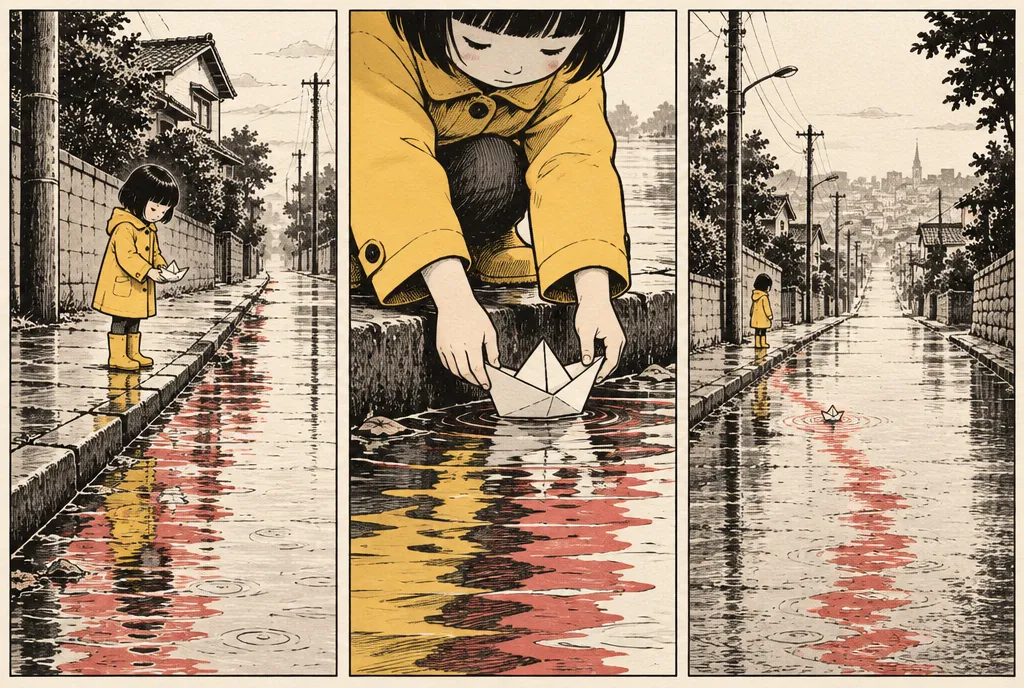
Three panel silent strip
flare · medium · 1536x1024 · 27s
Three panel horizontal comic strip with no dialogue and no captions, read left to right, drawn in clean black brush ink on cream paper with a single spot colour of faded red. Panels are equal width with narrow gutters. The recurring character in all three panels is a small girl in a yellow raincoat with a bowl haircut, holding a paper boat. Panel one is a wide shot of her standing at the edge of a flooded gutter after rain. Panel two is a low angle close on her hands setting the boat down on the water. Panel three is a distant wide shot from far up the street, the boat now small and moving away. Ink lines vary in weight, hatching only in shadow.
Removing dialogue removes the main failure mode, so the story has to carry through shot distance instead. Moving from wide to close to distant wide gives the three panels a shape without a word of text.
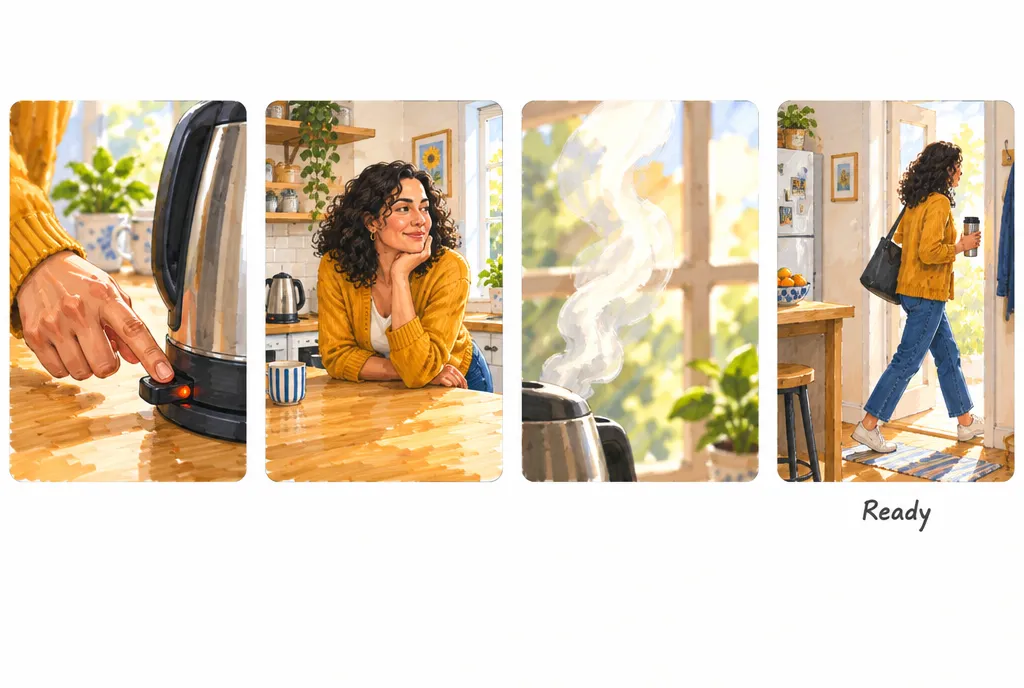
Commercial storyboard frames
flare · high · 1536x1024 · 30s
Four frame advertising storyboard laid out in a single horizontal row, read left to right, each frame a 16 by 9 rectangle with rounded corners and a caption line beneath. Drawn as loose colour marker roughs with visible stroke edges, warm and bright. The recurring character in every frame is a woman in her thirties with curly dark hair and a mustard cardigan. Frame one is a close on her hand pressing a kettle switch in a morning kitchen. Frame two is a medium shot of her leaning on the counter waiting. Frame three is an insert shot of steam rising against window light. Frame four is a wide shot of her walking out of frame with a travel mug. The caption under frame four reads "Ready".
Marker roughs are the right register for an ad board because finished rendering invites clients to critique the wrong things. Only the last frame carries text, which keeps the lettering load low.
Noir detective comic page
flare · xhigh · 1024x1536 · 60s
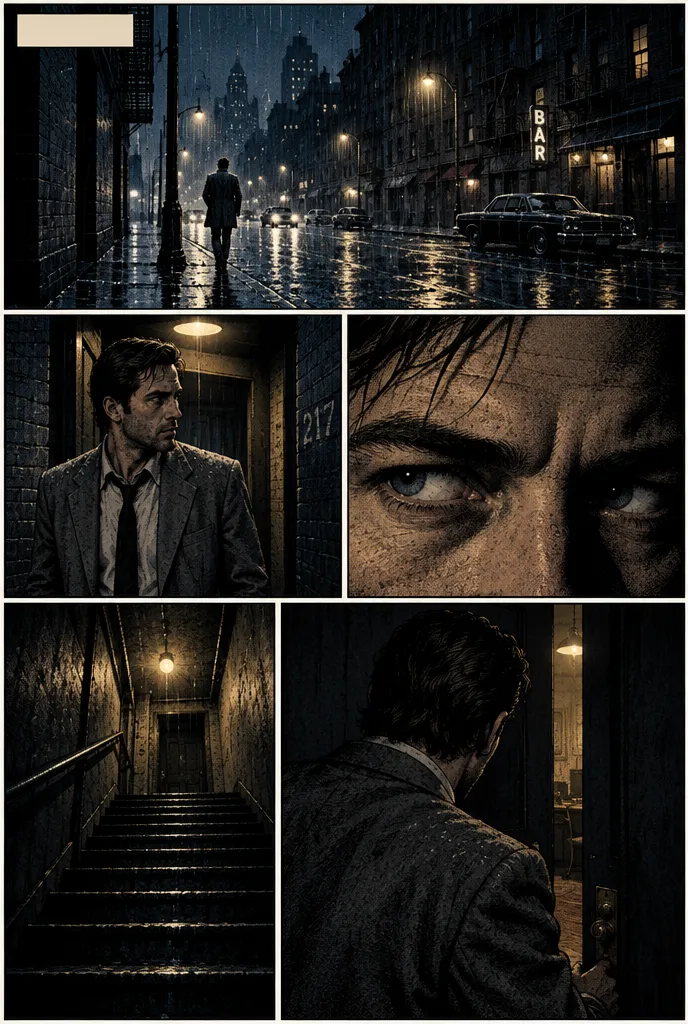
Full comic page with five panels, read left to right and top to bottom: a wide panel across the top, two equal panels in the middle row, one tall narrow panel on the lower left and one wide panel on the lower right. Heavy black spotting with high contrast chiaroscuro, halftone dot shading, muted blue and sepia. The recurring character in every panel is a detective in a rumpled grey suit, thin tie, three day stubble, hair pushed back. Top panel is a rain soaked street at night in wide shot. Middle left is a medium shot of him under a doorway. Middle right is an extreme close on his eyes. Lower left is a low angle of a stairwell. Lower right is an over the shoulder shot of a door opening. Keep the top left corner of the first panel clear for a caption.
An irregular panel grid needs to be described panel by panel, since asking for a dynamic layout returns an arbitrary one. Reserving the caption corner keeps the letterer from having to cover artwork.
Kids comic strip in colour
sunburst · high · 1024x1536 · 28s
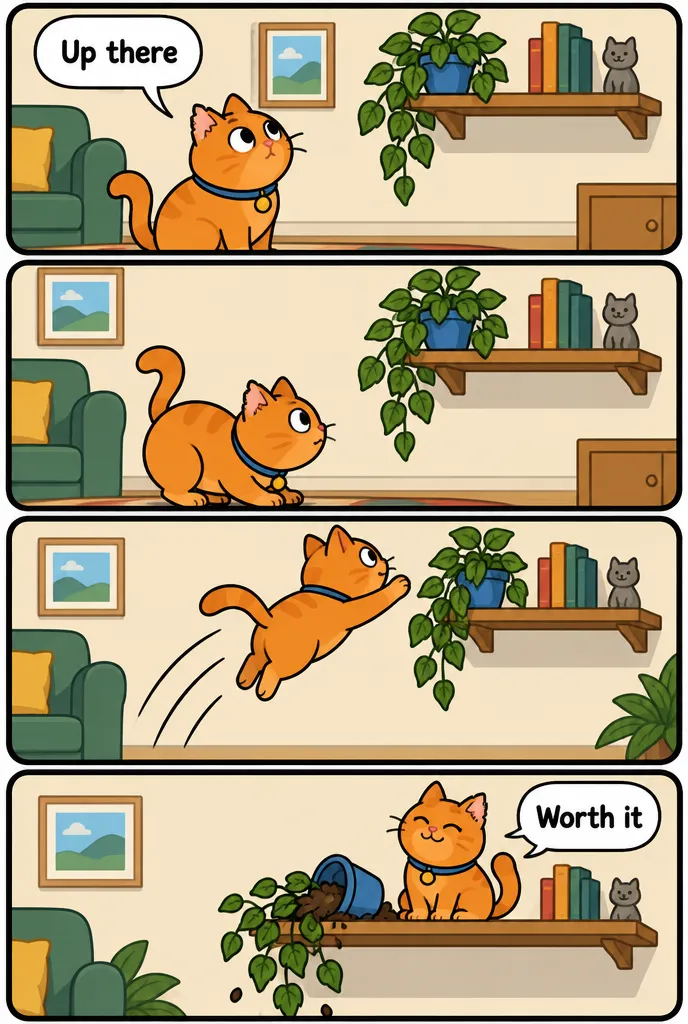
Four panel children's comic strip in a single vertical column, read top to bottom, with thick rounded black panel borders and bright flat colours. Friendly cartoon style with simple shapes and no crosshatching. The recurring character in every panel is a round orange cat with one torn ear and a blue collar. Panel one shows the cat staring up at a shelf, balloon reading "Up there". Panel two shows the cat crouching to jump, no text. Panel three shows the cat mid air with motion lines. Panel four shows the cat sitting calmly on the shelf next to a fallen plant, balloon reading "Worth it". Balloons sit in the upper corners with a clear tail. Keep faces away from balloon space.
Two balloons of two or three words each is about the safest text load in a four panel strip. Naming a physical quirk such as the torn ear gives the model an anchor that survives across panels.
Single establishing frame
flare · high · 1536x1024 · 27s
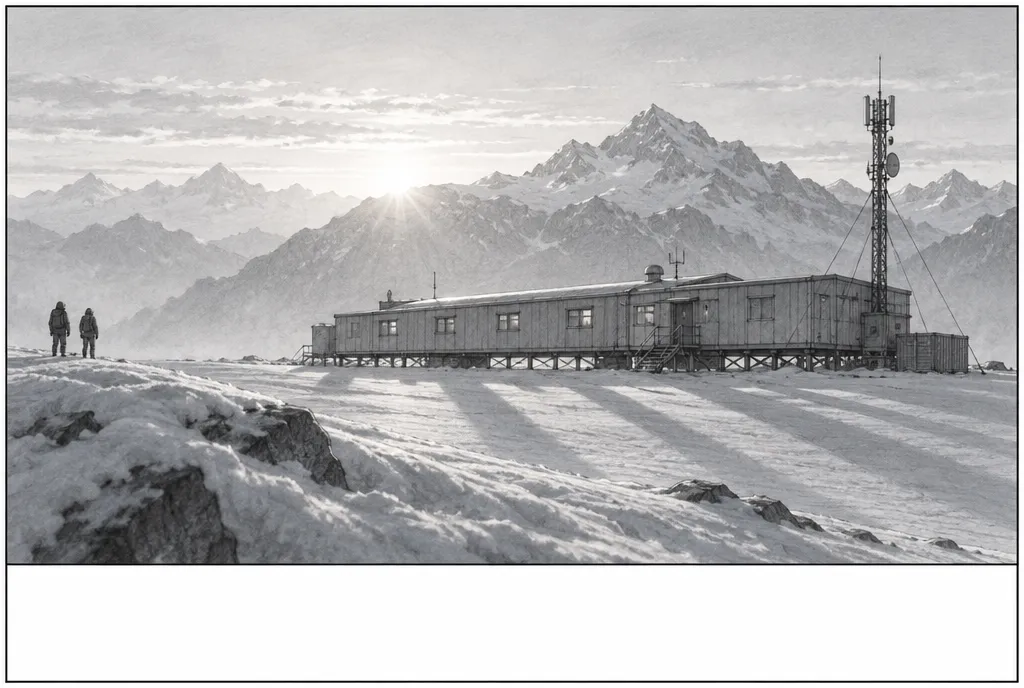
Single storyboard frame in a 16 by 9 rectangle with a thin black border, drawn in pencil with grey wash. A wide establishing shot of a mountain research station at dawn, seen from a low camera position on the approach road. Two small figures in parkas stand at the far left for scale, drawn as simple silhouettes with no facial detail. The station is a long low prefabricated building on stilts with a communications mast at the right. Light comes from the low sun behind the ridge, throwing long shadows across snow toward the camera. Depth is built in three planes: foreground snow ridge, mid ground building, background peaks fading into haze. Below the frame a blank note strip runs the full width.
Naming three depth planes is how you get an establishing shot that reads as space rather than a flat backdrop. Figures for scale are drawn as silhouettes so the model does not spend effort on faces nobody will see.
Two panel reveal
sunburst · high · 1024x1024 · 26s
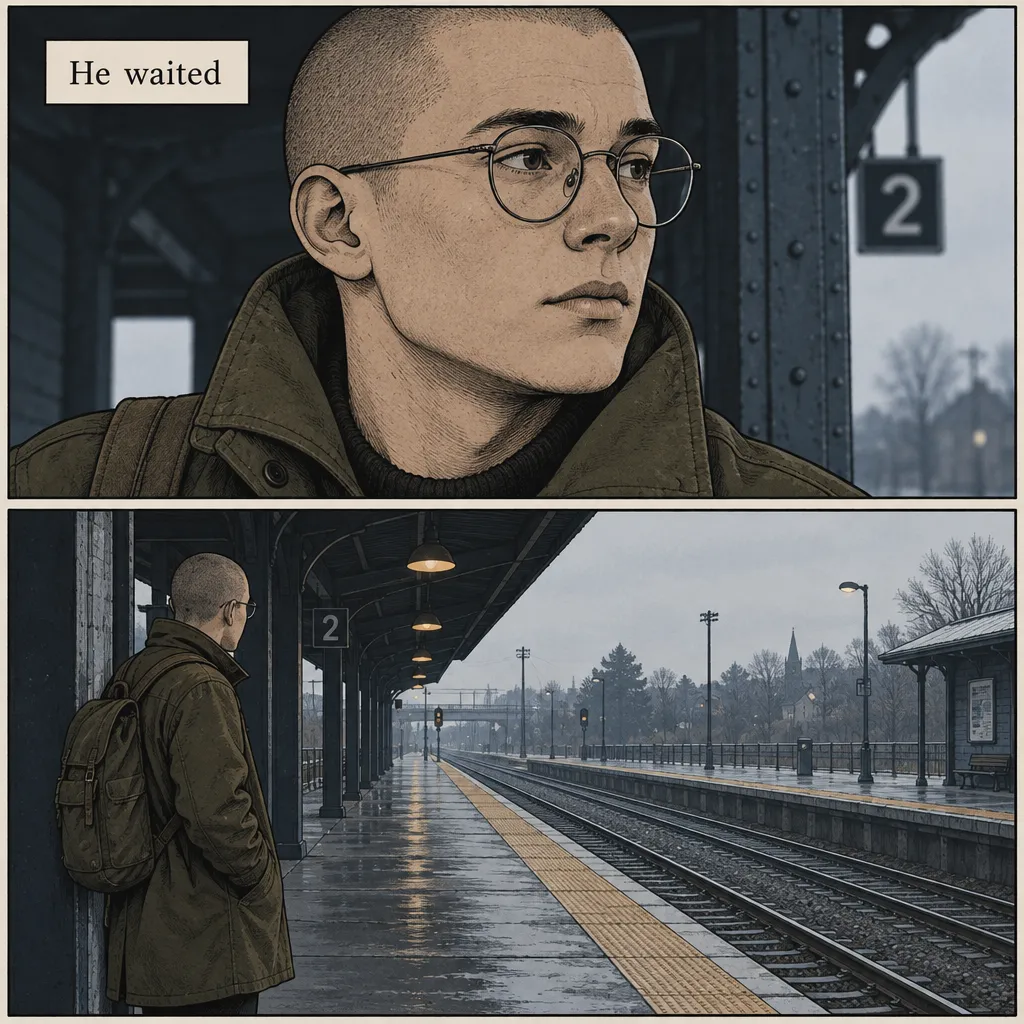
Two panel comic in a single vertical column, read top to bottom, with a thin gutter between them, drawn in flat ink with a muted palette of slate blue, bone white and one warm ochre. The recurring character in both panels is a young man with a shaved head, wire framed glasses and a heavy olive canvas coat. The top panel is a tight close on his face looking off to the right, expression neutral, a caption box in the upper left reading "He waited". The bottom panel is the reverse angle: a wide shot revealing an empty train platform stretching away, with him small at the left edge. No dialogue in the second panel. Keep the gutter clean and the caption clear of his face.
A reveal only works when the second panel is an actual reverse angle, so the prompt says reverse angle rather than describing a new scene. One caption box carries the whole text load.
Frequently asked questions
How do I keep a character consistent across panels?
Write one description with three or four concrete physical details and paste it into every panel unchanged. A shaved head, wire framed glasses and an olive canvas coat give the model something to hold. Referring back with the same man or she is where drift starts, because a pronoun carries no visual information for the model to reuse.
How much dialogue can a strip carry?
Keep each balloon to a handful of words and use two or three balloons across a four panel strip. Short quoted phrases are where rendered text holds up best. If your script is longer, generate the artwork with balloon space left clear and add the lettering afterwards in a layout tool, which is what most comics workflows do anyway.
Which model suits sequential work?
Use gpt-image-2.5-sunburst when balloons and caption boxes carry actual words, since precise text is what it is built for. Use gpt-image-2.5-flare for silent strips, marker roughs and storyboards where the panels carry only shot information. Flare is the faster default and it is usually enough for grey wash boards.
Why do my panel grids come out uneven?
Because the grid was implied rather than stated. Say four panels in a two by two grid with even gutters, or describe an irregular page panel by panel with each position given. Reading order matters too. Adding read left to right and top to bottom keeps the sequence in the order you wrote it.
Can I redraw one panel without regenerating the page?
Yes. GPT Image 2.5 handles multi-turn editing more reliably than the previous generation, so you can ask for a new angle in panel three while leaving the rest alone. Repeat the fixed character description in that follow up request as well, so the redrawn panel matches the ones around it.